
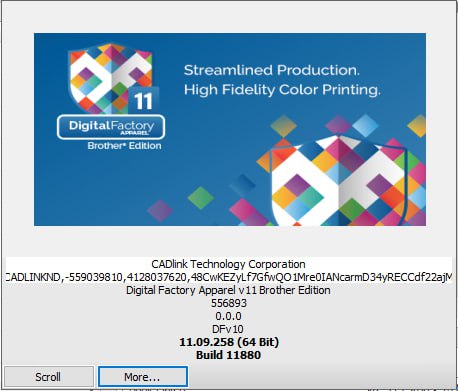
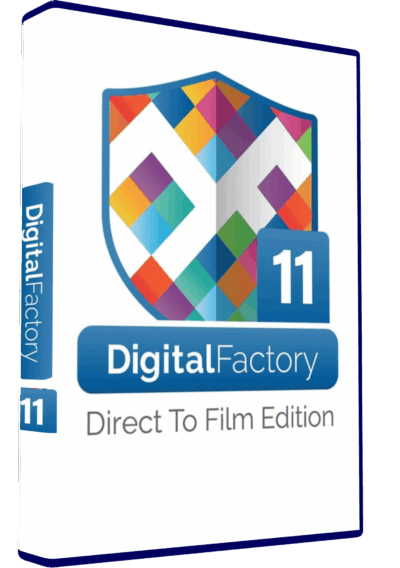
Digital Factory Apparel v11 Brother Edition – DTG RIP Software

35,00 $
Digital Factory Apparel v11 Brother Edition is professional RIP and production workflow software developed for compatible Brother direct-to-garment printers. It provides advanced tools for color management, automatic white…
In stock Digital product
- Digital DeliveryBy email after processing
- Secure CheckoutProtected payment
- Installation AssistanceSetup guidance included
Delivery & Activation
From checkout to installation
-
1
Place your order
Complete checkout securely with your preferred payment method.
-
2
Receive your product
Once your order is processed, download details are sent to your email and appear under My Account > Downloads.
-
3
License & activation
Any license or activation information included with this product is delivered together with your order.
-
4
Install with support
Follow the included installation instructions. If you get stuck, our team provides installation assistance.
Digital Factory Apparel v11 Brother Edition – Professional DTG RIP Software
Digital Factory Apparel v11 Brother Edition is professional RIP and production workflow software developed for compatible Brother direct-to-garment printers. It provides advanced tools for color management, automatic white ink generation, underbase control, artwork preparation, production queues, image positioning, print preview, and efficient DTG job processing.
Designed for custom T-shirt businesses, apparel decorators, print-on-demand companies, fashion brands, promotional-product suppliers, and professional garment-printing shops, Digital Factory Apparel v11 Brother Edition helps simplify the complete production process from artwork preparation to final printer output.
The software is optimized for supported Brother DTG hardware and provides dedicated printer drivers, production queues, color profiles, and print modes. It allows operators to prepare artwork for white, colored, and dark garments while maintaining greater control over white ink, color accuracy, print layers, resolution, and job placement.
Whether you produce personalized T-shirts, hoodies, uniforms, fashion graphics, photographic prints, promotional apparel, logos, or customer artwork, Digital Factory Apparel v11 Brother Edition provides a professional workflow for consistent and organized garment production.
What Is Digital Factory Apparel v11 Brother Edition?
Digital Factory Apparel v11 Brother Edition is specialized RIP software created for compatible Brother direct-to-garment printing systems. RIP software processes digital artwork and converts it into printable color, white ink, resolution, layer, and device information that the printer can understand.
Unlike a standard printer driver, Digital Factory provides more control over white ink underbases, color profiles, print resolution, garment color, artwork placement, ink layers, production queues, and output settings.
The Brother Edition is designed for users operating supported Brother DTG printers, including selected GTX and GT-3 workflows. The exact printer drivers and profiles available depend on the installed software build, license, and device modules.
Some high-production Brother models, including Brother GTX Pro Bulk and GTX 600, may require additional printer modules. Customers should provide the complete Brother printer model before ordering so that compatibility can be confirmed.
Why Choose Digital Factory Apparel v11 Brother Edition?
Professional DTG printing requires more than sending an image directly from a design program to a printer. Artwork must be sized correctly, positioned accurately, prepared for the selected garment color, and separated into color and white ink data when printing on dark apparel.
Digital Factory Apparel v11 Brother Edition brings these production tasks together in one organized RIP environment. This reduces repetitive preparation work and helps operators use consistent settings for new and repeat orders.
- Professional RIP workflow for compatible Brother DTG printers
- Automatic white ink underbase generation
- Advanced ICC color management
- Dedicated Brother printer drivers and profiles
- Production queues for different garment colors
- Artwork preparation for light and dark garments
- Control over white and color print layers
- Image resizing, positioning, mirroring, rotation, and cropping
- Job preview before printing
- Support for common raster and vector file formats
- Reusable production presets
- Hot-folder workflow options
- Professional output for growing DTG businesses
Main Features of Digital Factory Apparel v11 Brother Edition
Professional Brother DTG RIP Processing
Digital Factory Apparel v11 processes artwork before it is sent to a supported Brother printer. The RIP engine interprets the graphic file, applies the selected color profile, generates white ink information, controls print layers, and prepares the final production data.
This workflow gives operators more control than a basic Windows printer driver and makes it easier to maintain repeatable output across different jobs.
Automatic White Ink Underbase
White ink is essential when printing colored graphics on black, navy, red, green, and other dark garments. Without a white underbase, the fabric color can affect the printed image and make the colors appear dull or inaccurate.
Digital Factory Apparel v11 can automatically create a white ink underbase based on the artwork, transparency, and selected production queue.
The software analyzes the image and places white ink beneath the required color areas while preserving transparent regions. This reduces the need to manually create a separate white layer in Adobe Photoshop or another design application.
White Ink Density Control
Different garments and designs require different amounts of white ink. A large photographic design printed on a black shirt may need a stronger underbase than a small logo printed on a medium-colored garment.
Digital Factory allows operators to adjust white ink levels according to the artwork, garment shade, desired opacity, print quality, ink consumption, and production speed.
Correct white ink settings can help improve color vibrancy while avoiding excessive ink use and an unnecessarily heavy print feel.
Underbase and Highlight Layers
Digital Factory can manage separate white underbase, color, and highlight layers depending on the printer and selected workflow.
The underbase is normally printed beneath the color artwork. A highlight layer may reinforce selected white or bright areas to improve contrast and visual impact.
Each production layer can represent a separate print pass and may contain individual settings for resolution, ink level, print direction, and output behavior. :contentReference[oaicite:1]{index=1}
Independent Print Layer Settings
Digital Factory Apparel v11 can allow different settings to be applied to individual layers.
For example, the white underbase may use one resolution and ink level, while the color layer uses another configuration. This helps operators balance speed, detail, opacity, ink consumption, and production quality.
The exact available layer controls depend on the Brother printer, driver, queue, and installed license.
Printing on Light and Dark Garments
Digital Factory Apparel v11 Brother Edition supports production workflows for both light and dark apparel.
White and light-colored garments may use a color-only workflow when appropriate. Dark garments generally require a white underbase followed by the color layer.
Separate production queues can be created for common garment colors and print modes, allowing operators to choose the correct workflow without rebuilding settings for every order.
Advanced Color Management
Digital Factory Apparel includes professional color-management tools designed to improve color accuracy, tonal balance, gradients, photographic detail, and repeatability.
Color management is particularly important for company logos, brand colors, fashion artwork, photographic images, sports apparel, and repeat customer orders.
Digital Factory uses printer profiles and production settings to translate the original artwork into printable color values for the selected Brother printer and workflow.
Final results can still be affected by printer condition, ink quality, garment type, pretreatment, humidity, printhead maintenance, curing, and operator settings.
ICC Profile Support
ICC profiles describe how a specific combination of printer, ink, garment, and print mode reproduces color.
Digital Factory can use compatible ICC profiles to improve the predictability of printed output. The selected profile should match the Brother printer, ink set, resolution, and production conditions.
Changing the printer, ink, resolution, or production settings may require a different profile. Fiery documentation notes that profiles should be created and used with the exact media and print settings for which they were prepared. :contentReference[oaicite:2]{index=2}
Color Replacement
Color replacement tools can help operators modify selected colors during production preparation without returning to the original design application.
This is useful for:
- Team-color changes
- Logo variations
- Brand-color corrections
- Customer revisions
- Personalized clothing
- Multiple color versions of one design
This feature can save time when the same artwork must be printed in several color combinations.
Transparent Artwork Processing
DTG artwork often includes transparent backgrounds, soft shadows, semi-transparent pixels, faded edges, and antialiased details.
Digital Factory processes transparency when generating white and color ink information. Correct transparency processing helps prevent unwanted white boxes, rough outlines, and excessive white ink beneath soft effects.
For best results, use high-resolution transparent PNG, TIFF, PSD, or compatible PDF artwork.
Garment Color Knockout
Garment color knockout allows the fabric itself to replace selected colors in the artwork.
For example, black areas in a design printed on a black shirt may be removed so that the garment provides the black color naturally.
This technique can reduce ink usage, create a softer print, and improve breathability. It should be applied carefully because the final result depends on the garment color, fabric texture, design, and customer expectations.
Production Queue Management
Digital Factory Apparel v11 Brother Edition organizes print jobs through configurable production queues.
Each queue can contain settings for a specific Brother printer, garment color, print resolution, white ink level, color profile, and production mode.
Print shops can create reusable queues for workflows such as:
- White T-shirts
- Black T-shirts
- Colored garments
- High-quality photographic printing
- Fast production mode
- Small chest logos
- Large front designs
- Back prints
- Children’s garments
- Sample printing
- Test prints
- Repeat customer orders
Reusable queues reduce setup time and help different operators maintain consistent production settings.
Visual Production Manager
Digital Factory provides a visual production interface where operators can review jobs, queues, artwork previews, dimensions, copies, and output status.
This makes it easier to organize multiple jobs and identify which files are waiting, processing, completed, or held.
The interface also provides access to tools such as queue management, gang-sheet creation, production markup, and device configuration, depending on the installed version and modules. :contentReference[oaicite:3]{index=3}
Job Preview Before Printing
Operators can preview the artwork inside the selected print area before sending the job to the Brother printer.
The preview helps confirm:
- Artwork size
- Print position
- Orientation
- Crop boundaries
- Transparent background
- Garment workflow
- Selected production queue
Previewing the job can prevent mistakes before consuming ink, pretreatment, garments, and production time.
Pre-Production Editing Tools
Digital Factory Apparel v11 includes practical tools for common production adjustments.
- Resize artwork
- Set exact print dimensions
- Crop unwanted areas
- Rotate the design
- Mirror artwork
- Position the design on the print area
- Create multiple copies
- Adjust selected colors
- Prepare different size variations
- Organize multiple print jobs
These tools reduce the need to reopen CorelDRAW, Illustrator, or Photoshop for simple production changes.
Hot Folder Automation
Hot folders can automate the process of adding artwork to a production queue.
A file placed in a configured folder may be imported automatically into a selected Brother workflow with predefined settings.
This is useful for busy print shops, online stores, production teams, and companies processing large numbers of customer files.
Separate hot folders can be configured for different garment colors, print modes, queues, or printer setups.
Job Layout and Multiple Copies
Digital Factory allows operators to duplicate and arrange designs within the available production area.
This is useful when producing several small logos, samples, labels, or repeated graphics.
Efficient layout can reduce preparation time and help operators organize multiple items more effectively.
Design Software Workflow
Artwork can be prepared in common graphic-design applications such as:
- Adobe Photoshop
- Adobe Illustrator
- CorelDRAW
- Affinity Designer
- Other raster and vector design software
The finished artwork can then be exported in a supported format and imported into Digital Factory for RIP processing.
Direct-send plugins and integrations may depend on the installed Digital Factory build, Windows version, and design-software release.
Supported Artwork and File Formats
Digital Factory Apparel v11 can process many file formats commonly used in professional garment printing.
- PNG
- TIFF
- JPG and JPEG
- PSD
- EPS
- BMP
- Common raster formats
- Common vector and print formats
Transparent PNG and TIFF files are commonly used for DTG printing because they preserve transparent backgrounds.
PDF and EPS files may be suitable for vector artwork and professional production workflows.
Missing fonts, complex transparency, linked images, unsupported effects, or damaged files may need to be corrected or flattened before production.
Artwork Preparation Recommendations
- Use high-resolution artwork whenever possible.
- Remove unwanted backgrounds.
- Use transparent files when no rectangular background is required.
- Check the final physical print dimensions.
- Avoid enlarging very small images excessively.
- Convert or embed fonts before submitting artwork.
- Inspect transparent edges for unwanted white pixels.
- Save an editable master copy before production.
- Confirm the artwork is suitable for the selected garment color.
- Perform a sample print before processing a large order.
Perfect for Brother DTG Printing Businesses
Digital Factory Apparel v11 Brother Edition is suitable for businesses using compatible Brother direct-to-garment printers.
- Custom T-shirt businesses
- Direct-to-garment print shops
- Print-on-demand companies
- Apparel-decoration businesses
- Fashion and streetwear brands
- Promotional-product suppliers
- Uniform-printing companies
- Sportswear businesses
- Personalized gift stores
- Online apparel shops
- Commercial garment printers
- Startup printing businesses
Products You Can Prepare
With a compatible Brother DTG printer, appropriate inks, garments, pretreatment, and curing equipment, Digital Factory Apparel v11 can be used to prepare artwork for many customized products.
- Custom T-shirts
- Hoodies
- Sweatshirts
- Tank tops
- Children’s clothing
- Uniforms
- Workwear
- Sports apparel
- Fashion garments
- Promotional clothing
- Event merchandise
- Personalized apparel
- Branded company clothing
Actual garment compatibility depends on the printer, ink, fabric composition, pretreatment, platen, curing method, and manufacturer recommendations.
The Importance of Pretreatment
Digital Factory controls the digital print data, but successful DTG production also depends on correct garment preparation.
Dark cotton garments generally require pretreatment before printing white ink. Pretreatment helps the white ink remain near the surface of the fabric, improving opacity, color brightness, image detail, and wash resistance.
Too little pretreatment may cause weak white ink and dull colors. Too much pretreatment may cause stains, stiffness, crystallization, or poor surface quality.
Always follow the Brother printer, ink, garment, and pretreatment supplier recommendations.
Curing and Finishing
After printing, DTG ink must normally be cured using a heat press, conveyor dryer, or another approved curing method.
The correct temperature, pressure, airflow, and curing time depend on the ink, garment, printer, and curing equipment.
Incorrect curing may reduce wash durability, alter colors, damage the garment, or cause the ink to crack and fade.
Always perform production tests and wash tests before completing large commercial orders.
Compatible Brother Printers
Digital Factory Apparel v11 Brother Edition is designed for supported Brother DTG printers.
Common Supported Brother Families
- Brother GTX Series
- Brother GT-3 Series
- Selected Brother GT-Series printers
The official Fiery product overview identifies Brother GTX and GT-3 printers as key supported families. It also states that Brother GTX Pro Bulk and GTX 600 require additional modules. :contentReference[oaicite:4]{index=4}
Please provide the exact Brother printer model before ordering.
The phrase “Brother Edition” does not automatically guarantee support for every Brother printer. Compatibility depends on:
- Exact Brother printer model
- Available Digital Factory driver
- Software version and build
- License type
- Required add-on modules
- Printer firmware
- Ink configuration
- Windows operating system
- Printer connection method
System Requirements
System requirements may vary according to the installed Digital Factory v11 build, printer driver, artwork complexity, and production volume.
Recommended Windows Configuration
- Compatible 64-bit Windows operating system
- Modern Intel Core i5, Core i7, or comparable AMD processor
- 8 GB RAM minimum
- 16 GB RAM or more recommended for production use
- SSD storage recommended
- Sufficient free disk space for software and production files
- Compatible network or USB printer connection
- Stable internet connection for download, activation, and support
- Display resolution suitable for professional production software
A faster processor, additional RAM, and SSD storage are recommended when processing large PSD, TIFF, PNG, PDF, or high-resolution photographic files.
A dedicated production computer is recommended to reduce interruptions caused by automatic updates, antivirus scans, background software, and insufficient system resources.
What You Will Receive from Needlic
- Digital Download Access: Receive the supplied installation resources electronically.
- Installation Instructions: Follow the provided setup guidance.
- Activation Assistance: Receive help with the supplied activation process.
- Remote Installation Support: Remote assistance may be available when required.
- Fast Digital Delivery: No physical shipping or delivery delays.
- Customer Support: Contact Needlic for common installation and setup questions.
- Printer Compatibility Review: Compatibility can be reviewed when the full Brother model is provided.
Why Buy Digital Factory Apparel v11 Brother Edition from Needlic?
Needlic provides professional software for DTG printing, DTF production, embroidery, signage, graphic design, RIP workflows, and CNC manufacturing.
Professional printing software requires the correct printer driver, queue, color profile, operating system, and device configuration. Our goal is to provide clear product information, fast digital delivery, and practical installation assistance.
- Fast digital delivery
- Professional installation guidance
- Remote assistance when available
- Brother printer compatibility review
- Clear product information
- No physical shipping required
- Customer-focused support
- Experience with RIP and printing software
- Support for international customers
Benefits for Brother DTG Businesses
Digital Factory Apparel v11 Brother Edition can help create a more organized and efficient garment-printing workflow.
Operators can save queues for common garments, automate white ink creation, preview jobs, position artwork, and process customer orders from one environment.
Reusable production settings can make repeat orders easier and reduce the time required to prepare every job from the beginning.
The software can also reduce manual design preparation by handling common production tasks such as resizing, positioning, mirroring, cropping, color replacement, and underbase generation.
Important Information Before Purchase
- This product is delivered digitally.
- No physical package will be shipped.
- Provide the exact Brother printer model before ordering.
- Confirm whether an additional printer module is required.
- Verify that the Windows computer meets the system requirements.
- Back up existing queues, profiles, presets, and artwork files.
- Do not remove current production software until compatibility is confirmed.
- Test the workflow on a sample garment before commercial production.
- Final output depends on the printer, inks, pretreatment, garments, curing, and maintenance.
- Available features may vary according to the software build, license, and printer module.
Order Digital Factory Apparel v11 Brother Edition Today
Upgrade your Brother garment-printing workflow with Digital Factory Apparel v11 Brother Edition. Automate white ink underbases, manage professional color output, prepare designs for light and dark garments, organize production queues, preview print jobs, and process customer orders through one professional RIP environment.
Whether you operate a custom T-shirt business, fashion brand, print-on-demand store, promotional-products company, or professional Brother DTG production facility, Digital Factory Apparel v11 Brother Edition can help create a faster and more organized workflow.
Order from Needlic and receive fast digital delivery, installation guidance, activation assistance, printer compatibility review, and professional customer support.
FAQ
Frequently Asked Questions
What is Digital Factory Apparel v11 Brother Edition?
It is professional RIP and workflow software designed for compatible Brother DTG printers. It provides color management, automatic white ink generation, production queues, image preparation, job preview, and printer-output tools.
Which Brother printers are supported?
The Brother Edition is designed for supported Brother GTX and GT-3 workflows. Exact compatibility depends on the printer model, driver, software build, and license.
Does Brother GTX Pro Bulk require an additional module?
Yes. According to the official Fiery overview, GTX Pro Bulk requires an additional printer module.
Does Brother GTX 600 require an additional module?
Yes. The official product information identifies GTX 600 support as requiring an additional module.
Does it automatically generate white ink?
Yes. Digital Factory can automatically create white ink underbase information from compatible artwork and selected production settings.
Can I print on black garments?
Yes, when using a supported Brother DTG printer with white ink, proper pretreatment, suitable garments, and correct curing settings.
Can I print on white T-shirts?
Yes. Light garments may use a color-only workflow when appropriate, reducing white ink consumption and production time.
Does it support transparent PNG files?
Yes. Transparent PNG is commonly used for DTG production. The final result depends on the artwork quality and transparency structure.
Can I resize and position artwork inside Digital Factory?
Yes. Digital Factory includes tools for resizing, positioning, rotating, mirroring, cropping, and duplicating artwork.
Can Digital Factory replace Photoshop or CorelDRAW?
Digital Factory includes practical production-preparation tools, but it is mainly RIP and print-production software. Complex design work should still be completed in dedicated graphic-design applications.
Can I use this edition for DTF printing?
This edition is intended for compatible Brother DTG workflows. DTF support should not be assumed unless the required printer driver, ink configuration, and production module are specifically confirmed.
Does it work with every Brother printer?
No. Compatibility depends on the exact model and availability of a compatible Digital Factory driver or add-on module.
Is it compatible with macOS?
A compatible native Windows computer is recommended. Confirm the exact operating-system requirements before installation.
Will I receive a physical DVD or USB drive?
No. This is a digital product. No physical package will be shipped.
Does Needlic provide installation support?
Yes. Needlic provides installation guidance and may offer remote assistance. Printer maintenance, ink setup, pretreatment, curing, calibration, and production testing remain the responsibility of the printer owner or qualified technician.
Used this software? Write a review
Only logged in customers who have purchased this product may leave a review.
-
VinylMaster XPT 5 Sign Design, Cutting & RIP Software
Original price was: 120,00 $.70,00 $Current price is: 70,00 $.
Reviews
There are no reviews yet.